TULUX
+90 532 646 02 67
info@tulux.com.tr
Şehzadeler / Manisa · Türkiye
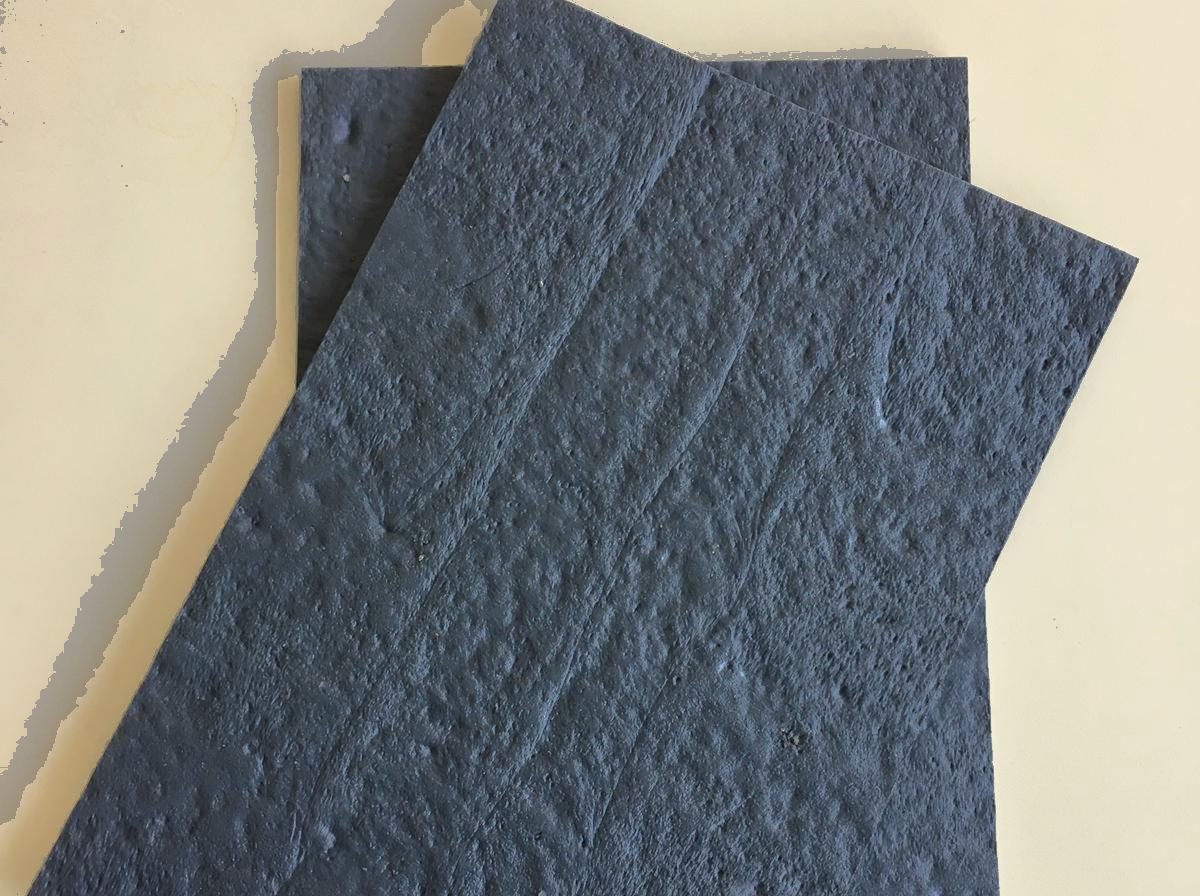
Two anthracite cable cover plates stacked on top of each other
HomeProductsCable Cover Plate
Product 02 · Cable protection

The bucket hits the warning before it hits the cable.

Specification compliant Recycled plastic Customisable dimensions Rot- and corrosion-free
01 / Product Cable Cover Plate

An excavator operator finds the plate before ever seeing the line.

In built-up areas, virtually every power, water, gas and communication line runs underground. Their greatest risk is an excavation opened years later along the same route.

As set out in specifications accepted worldwide, a cover plate is laid over the cable once the required bedding is in place. The bucket meets the plate before it meets the cable. The operator learns that a line runs below and continues by hand.

The plate is made from recycled plastic. Underground it does not rot, corrode or crumble; decades later it is still a legible warning for the crew digging above it. Its purpose is not to carry the line, but to stop the dig.
100%
Recycled
5
Standard sizes
0
Maintenance required
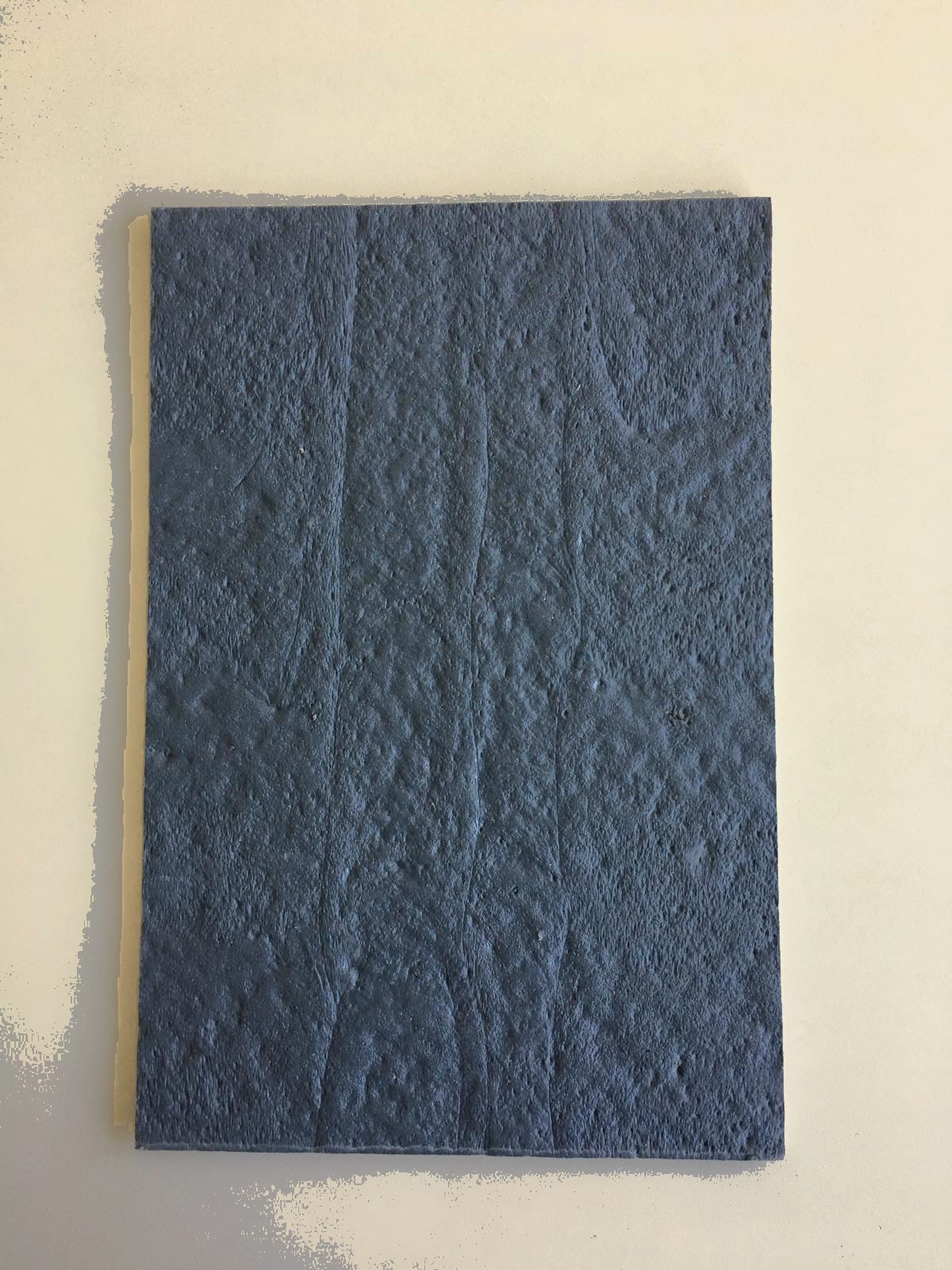
A single cable cover plate with a textured anthracite surface
Standard plate · 20 × 30 cm
Why a cover plate
  • Prevents accidents during excavation
  • Avoids damage to the line and service outages
  • Meets the specification requirement with a single product
  • Stays legible underground for the life of the line
  • Returns to raw material at the end of its life
02 / Dimensions

Choose the size,
see the plate.

Five standard sizes are produced from stock. The base size is 20 × 30 cm × 5 mm; width, length and thickness can be customised on request.

Technical drawing · live
Tulux
200 mm
300 mm
10 cm
5 mm Thickness · section magnified 8×
Standard sizes · mm
Custom size

For custom production the maximum dimensions are 600 mm wide and 2500 mm long.

200 mm
300 mm
0.06Area · m²
4Units per 1 m of line
17Units per 1 m²

Quantities assume the plates are laid end to end; overlapping installation increases the requirement. The strip type (150 × 1000 mm) is used on long runs to reduce the number of joints.

03 / Installation

Laid over
the cable.

The plate is the single step between laying the line and closing the backfill.

01
Prepare the trench and bedding

The trench is dug to the depth given in the specification and a sand bed is laid at the bottom. The bedding separates the line from stones and sharp fill.

02
Lay the line and the covering sand

The cable or pipe is placed on the bedding and covered again with sand. The plate rests on this covering layer, not directly on the line.

03
Position the cover plate

Plates are laid end to end along the route, aligned to cover the line continuously. On wide routes two rows are laid side by side. No cutting, drilling or fixings are required.

04
Close the backfill

The trench is filled and compacted layer by layer. The plate then waits in place until the next excavation; its work begins only on that day.

05
The specification governs

Depth, cover thickness, plate size and laying pattern follow the project specification; the steps above show the general sequence of work.
End-to-end laying Directly above the line No fixings
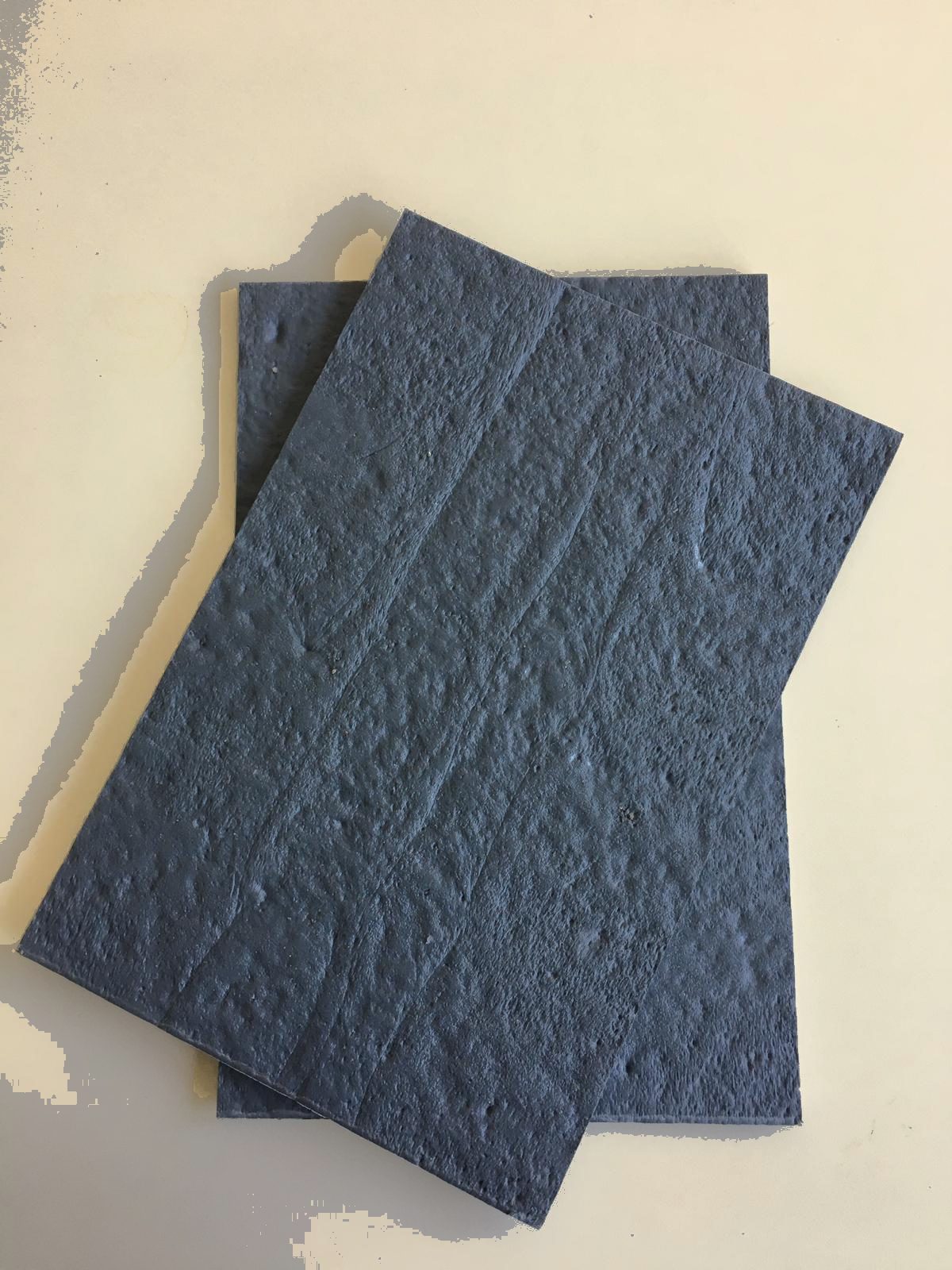
Two cover plates stacked, showing the edge thickness
Edge detail · 5 mm body
Material specification
Raw material
Recycled plastic
Colour
Anthracite · black
Surface
Matt · textured
Base size
20 × 30 cm
Thickness
On request · 5-6-7-8-9-10 mm
Custom production
Dimensions and thickness
Rot · corrosion
None
End of life
Back to raw material
04 / Applications

The same warning for every buried line.

Four line types
01
Power distribution

The most common application, on medium- and low-voltage lines. It is the first physical warning layer where a line cannot be located before digging.

02
Drinking water · wastewater

On pressurised lines, bucket contact causes both outages and ground collapse; the plate stops the dig before contact.

03
Natural gas

The highest-risk line type. Used together with warning tape, the plate provides a two-stage warning.

04
Communications · fibre

The most expensive lines to repair, with the widest impact when cut. The plate marks the route years later.

05 / Packaging and shipping

From pallet
to container.

Standard loading plan for the base size. Pallet and container quantities for other sizes are calculated on request.

50
Units · pack
4,000
Units · pallet
80,000
Units · container

Plates are packed in units of 50 and loaded onto 100 × 120 cm Euro pallets. Each pallet holds 80 packs, i.e. 4,000 plates. A 40' container takes 20 pallets — 80,000 plates in total.

* Figures apply to the 200 × 300 × 5 mm base size.
Shipping specification
Pallet size
100 × 120 cm · Euro
Packing
50 units / pack
Per pallet
80 packs · 4,000 units
Container
40' · 20 pallets
Per container
80,000 units
Export
Europe · Middle East · North Africa
Export page
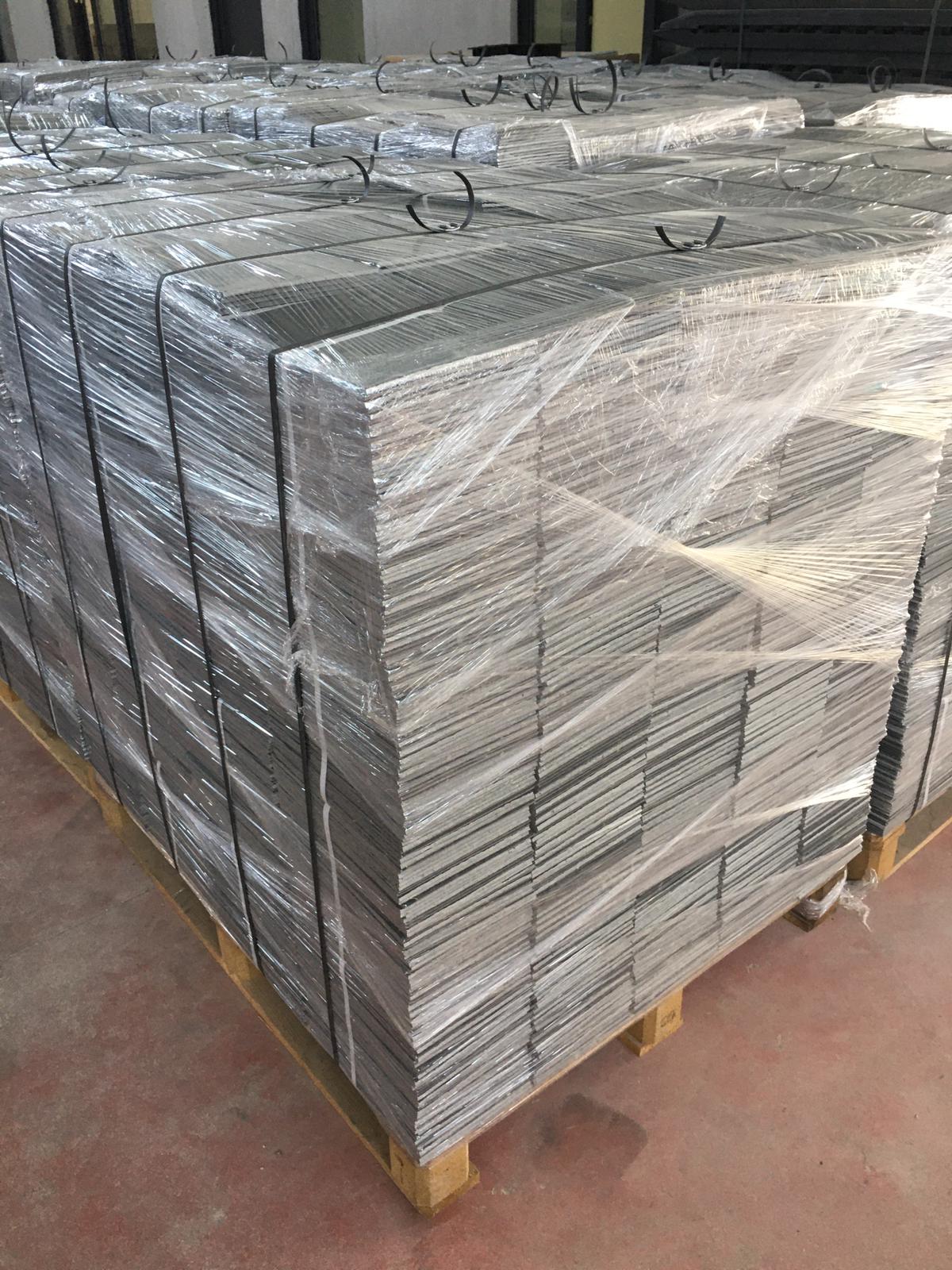
Close view of a shrink-wrapped and strapped pallet of cover plates

Packs are strapped and shrink-wrapped; pallet edges are secured with corner protectors.
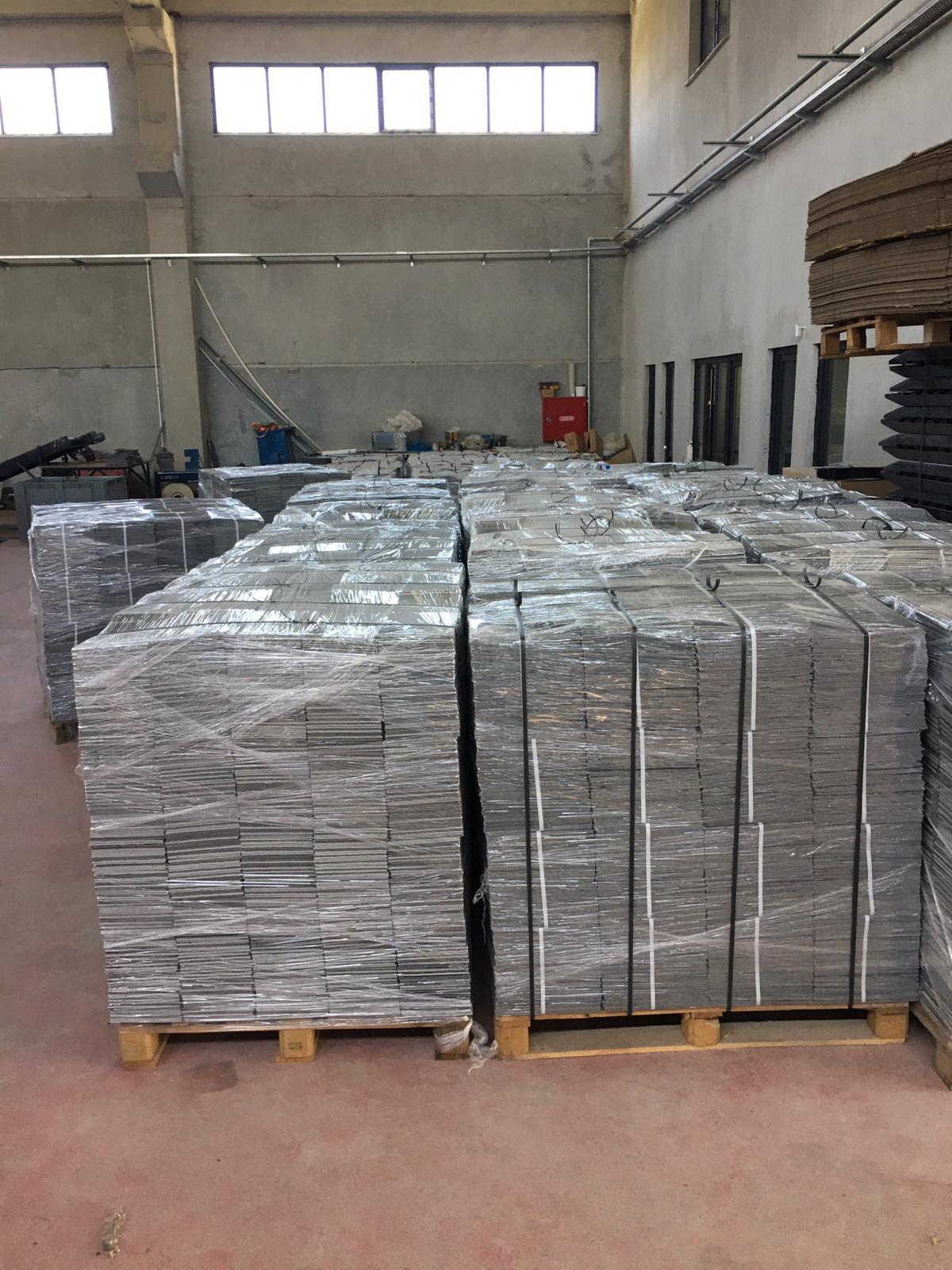
Pallets of cover plates waiting for dispatch in the factory warehouse

Pallets ready for dispatch in the factory warehouse.
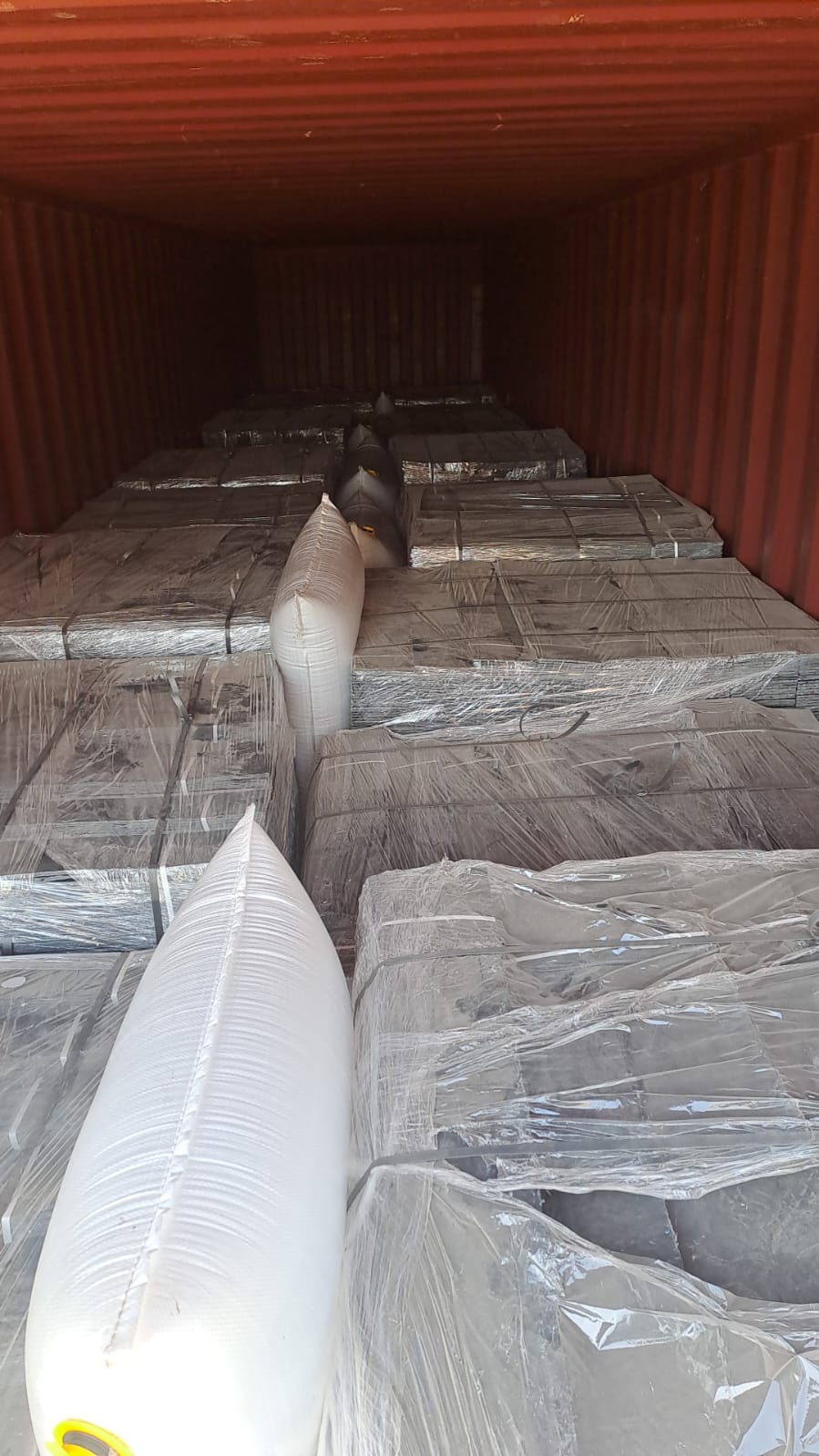
Shrink-wrapped pallets of cover plates loaded in a 40-foot container with dunnage air bags

Container loading: pallets are set in rows and the gaps secured with dunnage air bags.

Next to the cost of a strike during excavation, the cost of a plate is a rounding error.
TULUX · cable cover plate

A single layer added while the line is laid protects both the operator and the city years later.

06 / Frequently asked questions

Specification and installation questions.

Five questions

The size is chosen according to the width of the line and its layout within the trench. For single-cable runs the 200 × 300 mm base size is sufficient. For multiple cables or wide pipe routes, the 400 × 600, 600 × 600 and 600 × 800 mm plates cover the whole line with fewer joints. The 150 × 1000 mm strip type speeds up laying on long straight runs.

Yes. While the base size is 20 × 30 cm × 0.5 – 0.6 cm, width, length and thickness can be manufactured to the values you require. Simply send us the dimensions given in your specification; we will take it into the production plan and send a sample.

No. As the specifications require, the bedding and covering layer are formed first and the plate is laid on that layer. This way, when the plate is struck by an excavator bucket it does not transfer the load directly to the line.

Because the material is recycled plastic, it does not rot, corrode or absorb moisture. Unlike concrete or timber warning elements, it does not crumble and become illegible over time; it stays in place for the life of the line.

Yes. The plates can be used together with coloured warning tape selected for the line type. The tape gives the first warning during excavation while the plate acts as the physical barrier. Both products can be ordered together.
07 / Other products
01Safety Crossing Bridge 03Garden & Lawn Edging
08 / Contact

Send us your specified size and we'll send a sample.

Address

Head officeTurgut Özal Mah. 1443. Sok. No: 11
Şehzadeler / Manisa · Türkiye

FactoryHarmandalı Mah. Çakal Azamak Sok. No: 5
Şehzadeler / Manisa · Türkiye

Phone

+90 532 646 02 67
+90 532 231 86 14
+90 236 236 23 43